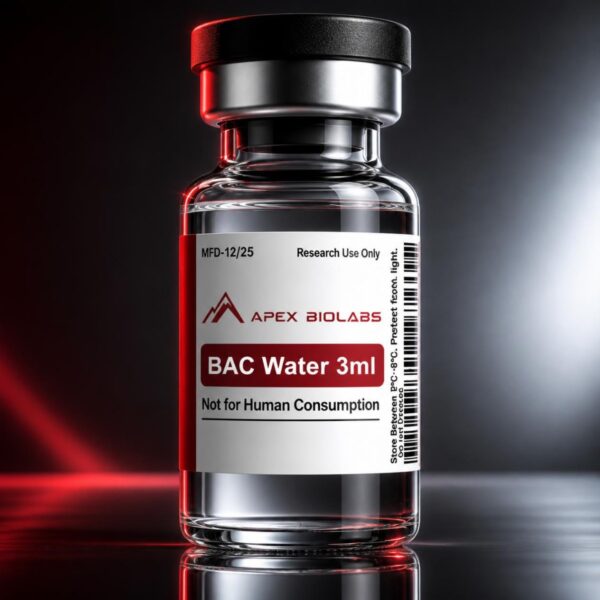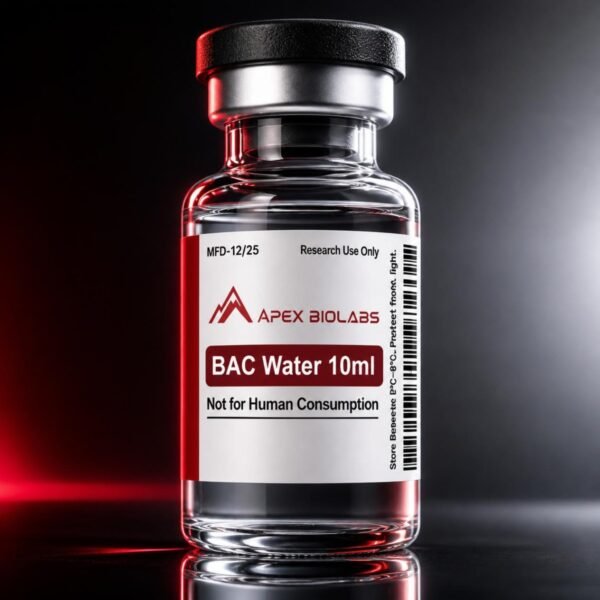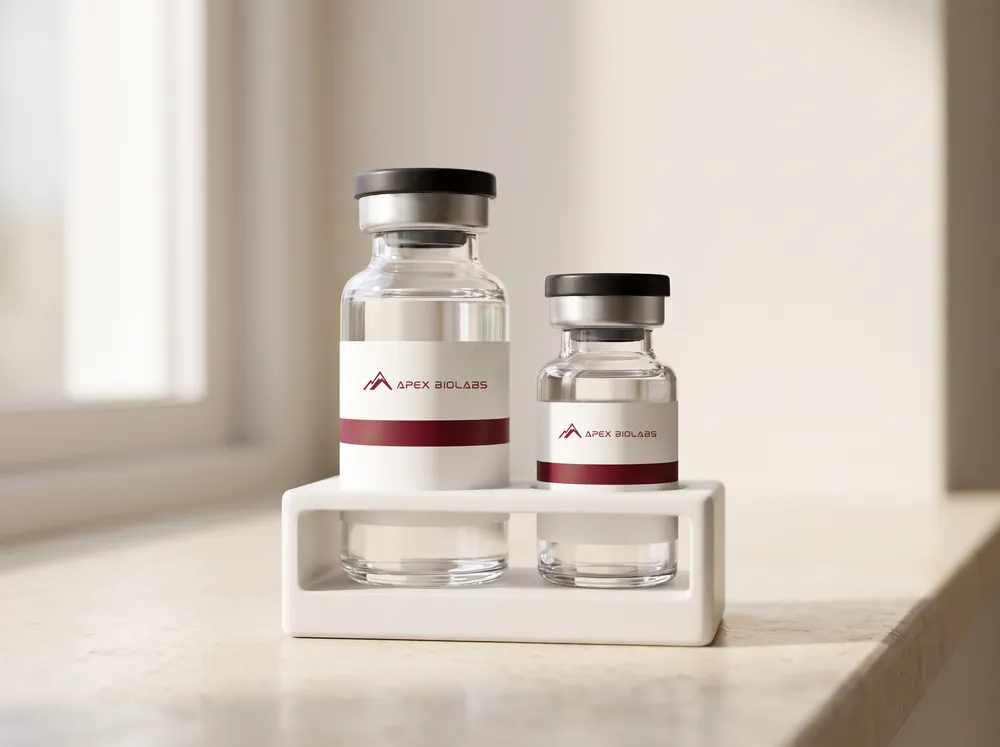
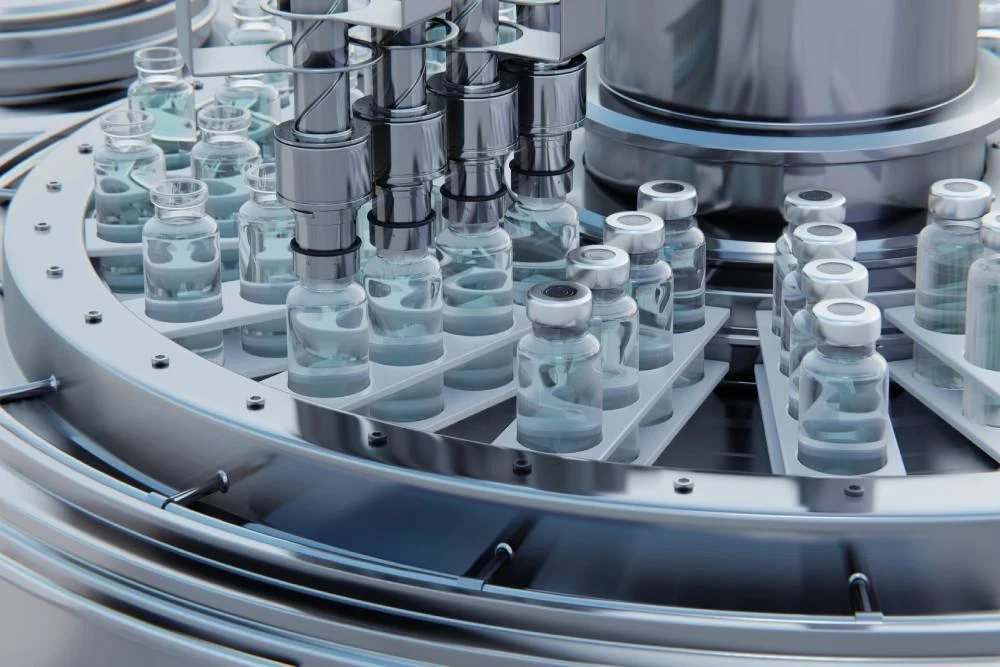
Most research peptides are supplied as a lyophilised powder: a dry cake at the bottom of a sealed vial. This article explains what lyophilisation is, why it is used, and the general storage practices laboratories follow to keep the material in good condition. Always follow your own institution’s protocols and any documentation supplied with the material.
What lyophilisation is
Lyophilisation, or freeze-drying, removes water from a frozen solution under low pressure. The ice turns directly into vapour (sublimation) rather than melting, leaving the dissolved material behind as a light, porous solid. In a vial, that solid usually looks like a white or off-white cake or loose powder. Some compounds are coloured: GHK-Cu, a copper complex, is blue.
Why peptides are supplied dry
Water takes part in many of the reactions that break peptides down over time, such as hydrolysis. Removing it slows those processes considerably, so a lyophilised peptide is generally far more stable in storage and transport than the same peptide in solution.
General storage guidance
- Long term: keep unopened vials frozen, typically at −20 °C, protected from light.
- Short term: refrigeration at 2–8 °C is commonly used for periods of up to several weeks.
- Light and moisture: store vials in their packaging or a dark container, and keep them sealed until needed.
Storage conditions for each compound are listed on its product page.
Avoiding moisture when opening a vial
A cold vial opened straight from the freezer draws condensation from the air, and moisture is exactly what lyophilisation removed. Let the vial reach room temperature before opening it, and reseal it promptly.
After reconstitution
Once a lyophilised peptide is dissolved, it loses much of the stability the dry form provides. Laboratories commonly keep solutions at 2–8 °C, record the preparation date on the vial, and follow their own protocols on how long a solution is kept. Repeated freezing and thawing of a solution is generally avoided.
Checking a vial on arrival
- The seal and cap should be intact.
- The cake may have broken up or settled in transit. That is normal and doesn’t on its own indicate a problem.
- If a vial arrives damaged, our Refund & Returns policy explains how to report it.
Research use only
All Apex BioLabs products are supplied for laboratory research and are not for human or veterinary use. See our research use information for the full terms, or browse our lyophilised research peptides.