A test report is only useful if it belongs to the vial in front of you. Anyone can paste a chromatogram into a product listing. What separates a verifiable report from a decorative one is a way to check it against the laboratory’s own records, and a clear link between the report and a specific batch.
What a verification key is
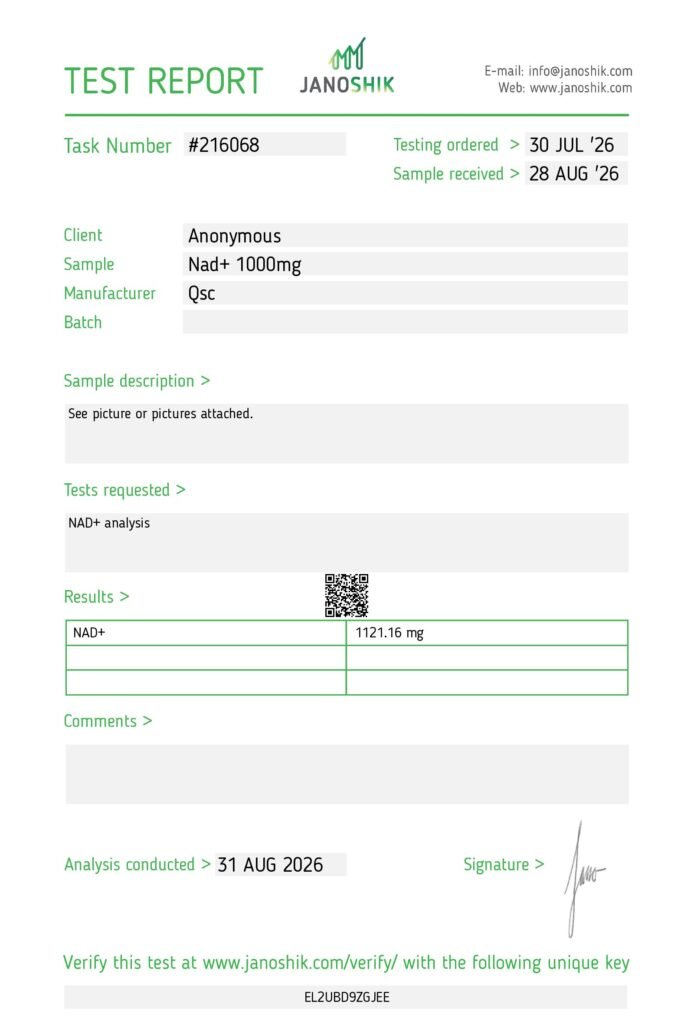
Independent laboratories such as Janoshik Analytical issue each report with a unique task number and a verification key. The key lets anyone confirm, on the laboratory’s own website, that the report exists, that it was issued by that laboratory, and that its results have not been edited since. If a supplier’s copy and the laboratory’s record disagree, the supplier’s copy is the one to doubt.
How to check a report, step by step
- Find the task number and key. Both are printed on the report itself, usually near the top or in the footer.
- Go to the laboratory’s verification page directly. Type the laboratory’s address yourself rather than following a link in a listing, so you know you are on the real site.
- Enter the key and compare. Check the compound name, the measured content in milligrams, the purity figure where one was tested, and the test date against the copy you were given.
- Match the batch. Compare any batch or lot identifier on the report with the label on your vial.
Red flags worth noticing
- No key or task number. A report that cannot be looked up cannot be confirmed.
- Cropped or low-resolution images. Missing headers, dates or footers often hide exactly the fields you need.
- One report for every size. A 15 mg and a 30 mg vial are different fills and should each have their own result.
- Purity without content. A high purity figure says nothing about how many milligrams are actually in the vial. Our guide to HPLC and mass spectrometry explains why.
- Old dates. A report reflects the sample on the day it was tested. A very old report may not describe current stock.
What verification does not tell you
Verification confirms that a report is genuine. It does not extend the report beyond what was tested. If a report covers identity, content and purity, it says nothing about sterility, endotoxins or heavy metals, which need separate methods. Read the list of requested tests as carefully as the results.
How we publish our reports
Every Apex BioLabs product page shows its full Janoshik Analytical report, including the verification key, and all of them are collected in our test report library. For a field-by-field walkthrough of a report, read how to read a peptide COA. If you cannot match a report to your vial, contact us with your order number and we will help.