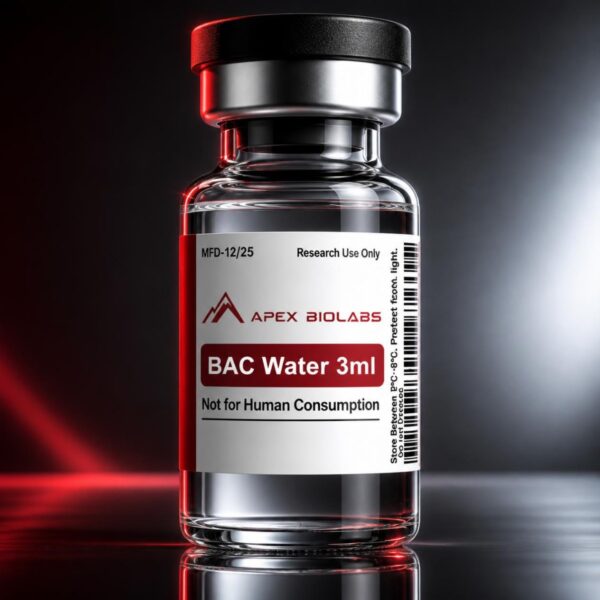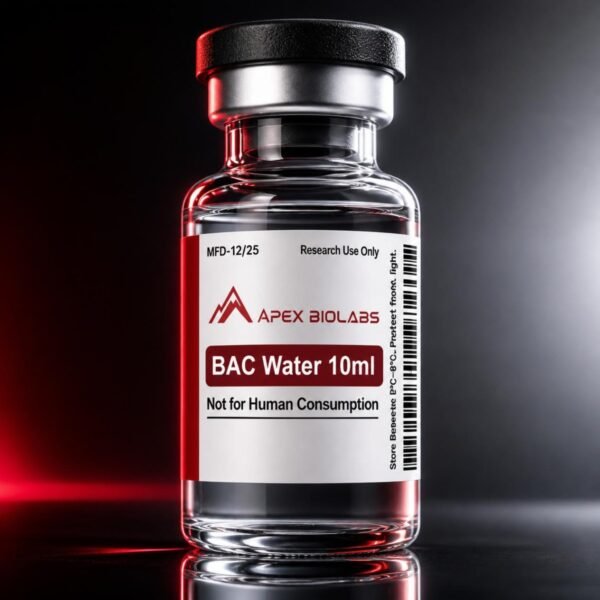
Most research peptides are sold as lyophilised (freeze-dried) powder rather than as a liquid. One practical reason is transport: a dry, sealed vial is far more tolerant of the time it spends in the post than a solution would be. Here is what happens between our dispatch bench and your laboratory, and what to do when a parcel arrives.
Why lyophilised vials travel well
Freeze-drying removes almost all of the water from a peptide. Most degradation reactions need water to proceed, so a dry powder in a sealed vial changes far more slowly than the same peptide in solution. That is why lyophilised peptides are generally shipped at ambient temperature, while long-term storage still follows the cooler conditions given in the product documentation. Our guide to storing lyophilised peptides covers this in more detail.
What does affect a vial in transit
- Heat over long periods. Short exposure is usually tolerated, but a parcel left in a hot letterbox or car for days is worth avoiding, particularly in an Australian summer.
- Moisture. A sealed, intact stopper keeps humidity out. A damaged seal lets it in.
- Light. Some peptides, especially those containing tryptophan, are light sensitive. Keeping vials in their packaging until use helps.
- Physical damage. Glass vials are packed to resist knocks, but a crushed parcel should be checked before anything is opened.
How we ship within Australia
Orders are sent with Australia Post tracked shipping and are dispatched within one business day of payment. Every order goes by Express Post at a $15 flat rate, free on orders of $250 or more. Tracking details let you plan to collect the parcel promptly rather than leaving it in a letterbox. Full details are in our shipping policy.
A checklist for when your parcel arrives
- Bring the parcel inside promptly and open it away from direct sunlight.
- Check each vial for cracks, a loose or damaged crimp, or a stopper that has moved.
- Check the powder. A lyophilised peptide normally appears as a dry cake or loose powder. A cake that has shrunk or shifted in transit is common and is not by itself a sign of a problem.
- Match the label to your order and to the batch on the test report for that product.
- Move vials to the storage conditions given in the product documentation.
If something arrives damaged
Take a photo of the vial and the packaging before discarding anything, and contact us with your order number. Our refund and returns policy explains how items damaged on arrival are handled under the Australian Consumer Law.